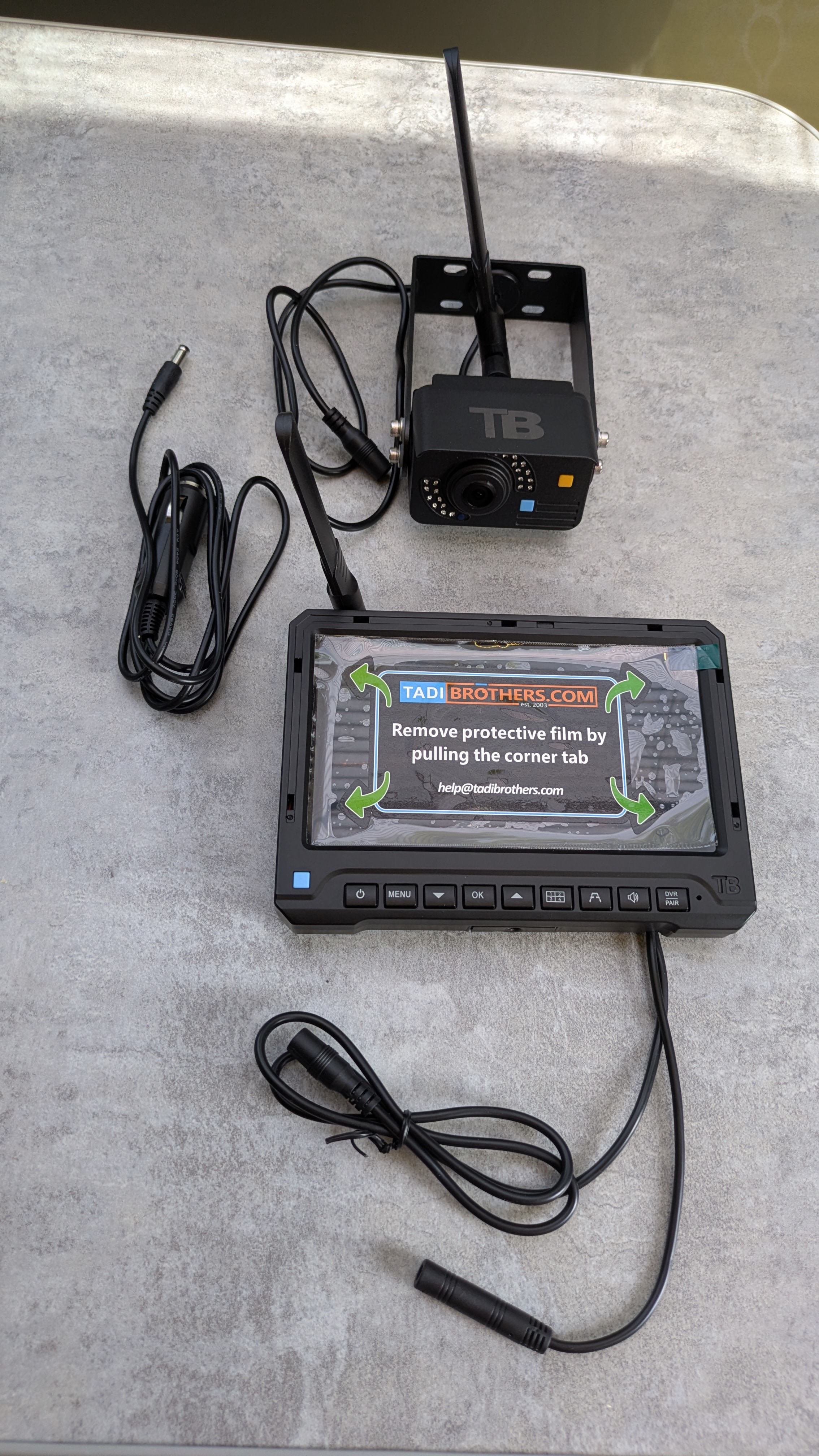
Towing a Safari Condo F1743 behind a Tesla Model Y is pretty easy. Rear visibility isn’t even that bad, the Y’s stock side mirrors and rear cameras do a pretty good job seeing around the trailer. But without some augmentation there’s no getting around the big blind spot directly behind the trailer. Enter the Tadi Brothers camera.
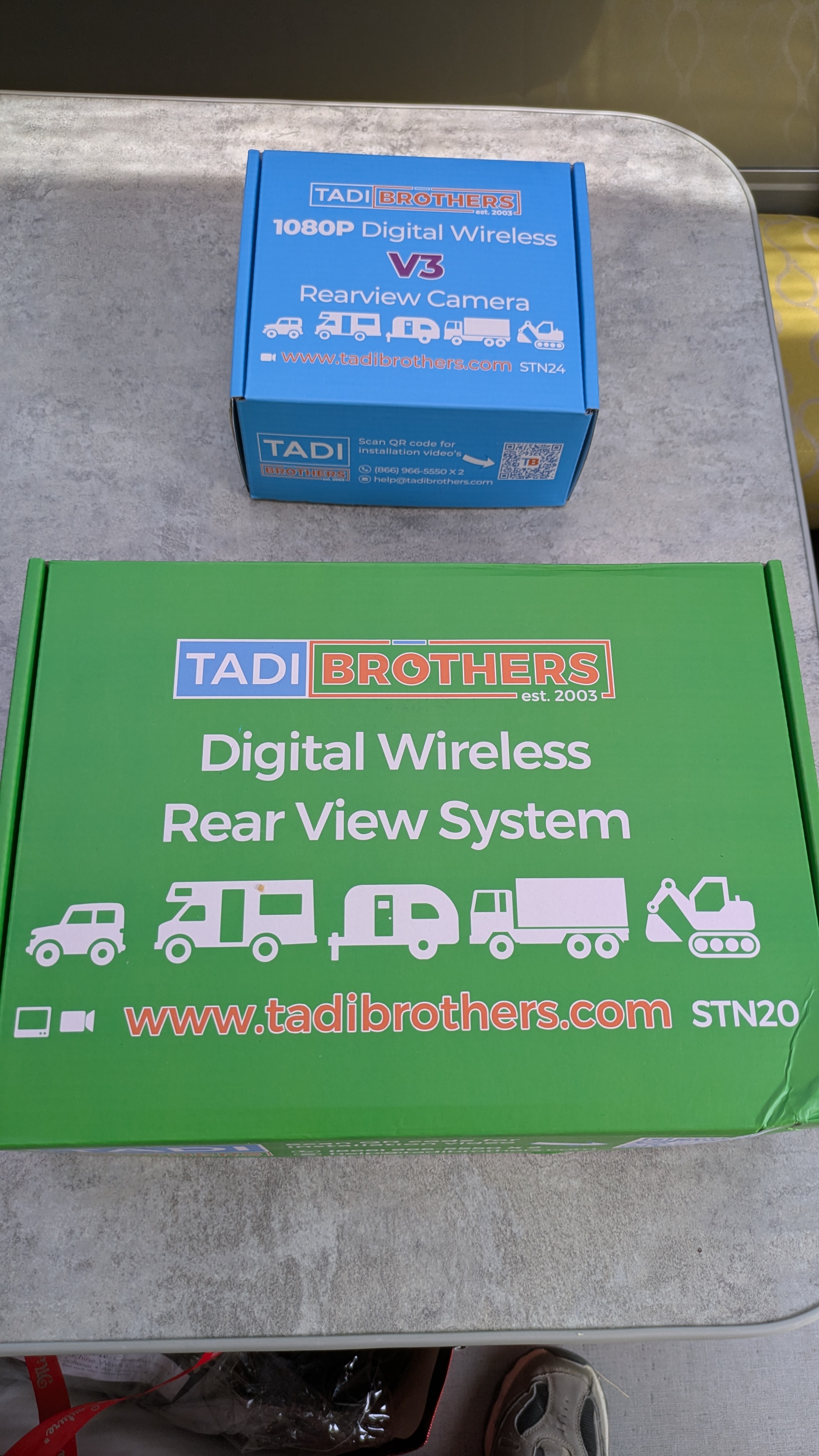
First a little test to see if I can use the running light signal to power the camera. I’ve verified with multimeter and ChatGPT that the running light signal that the Tesla Model Y produces is PWM (not solid DC). In the pictures below we see that the DC voltage (lights turned on) is 13.26V and the AC voltage is 3.93V. If this were a pure DC signal, the AC voltage would be essentially zero. An oscilloscope would give a clearer picture of what’s going on but it’s a safe assumption this is a PWM signal. Tesla does this to save a little power (electricity is a critical commodity in an EV) and provide an in-band communication link to a future smart trailer.
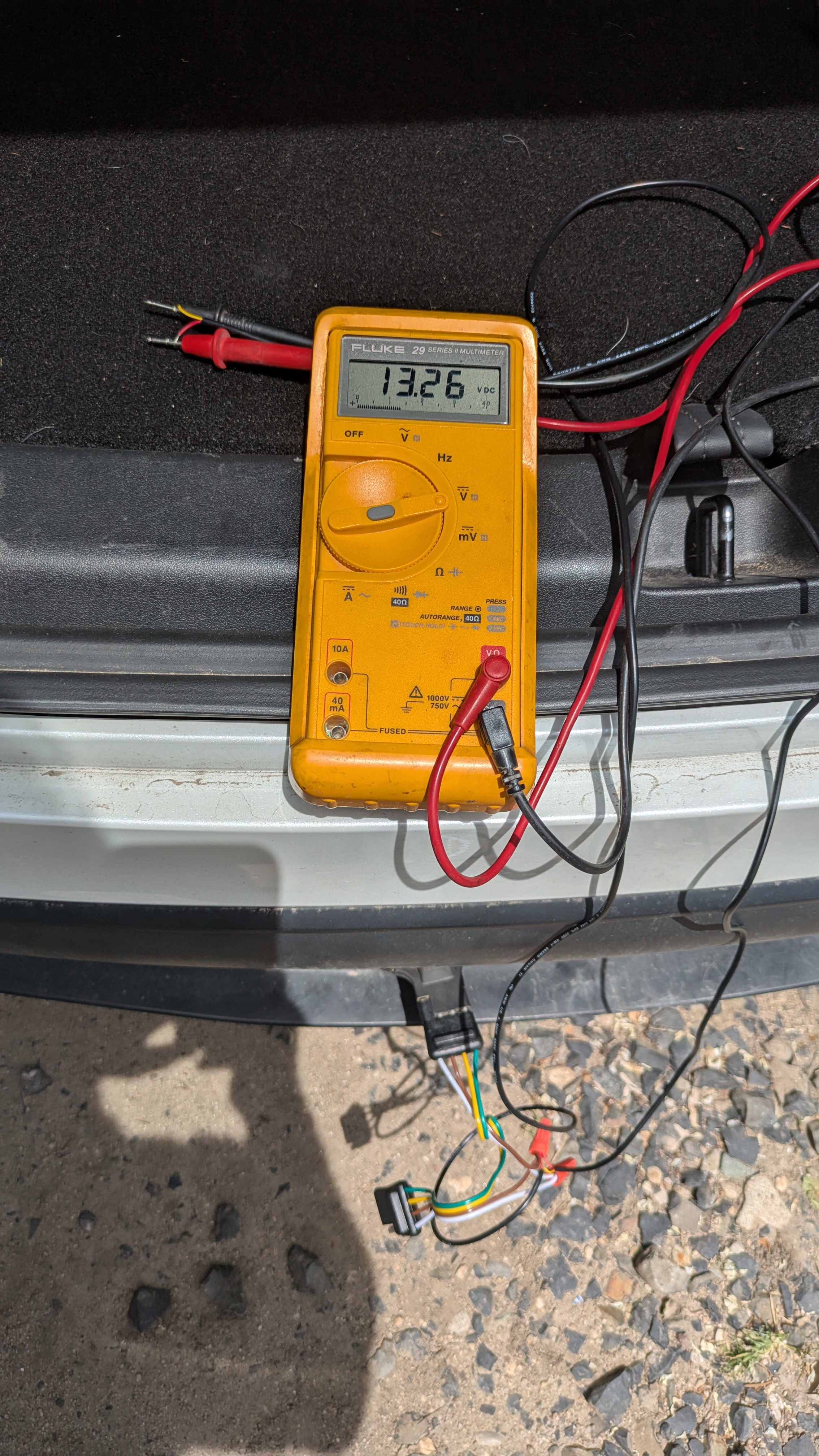
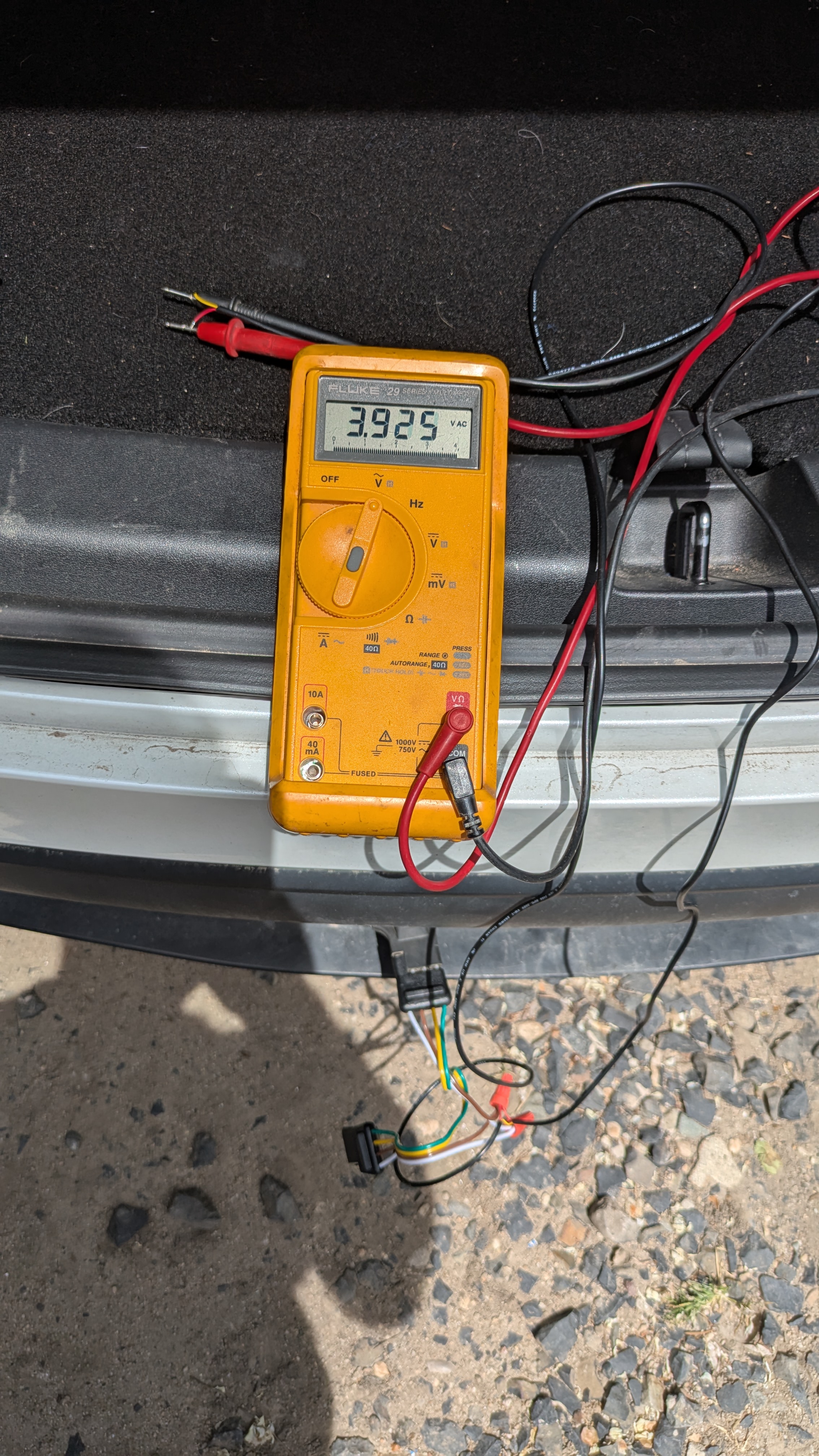
The problem with PWM is that some camera’s don’t like it. They can flicker or just not work at all. The solution is usually an in-line filter or power booster that probably includes a diode in addition to the capacitor.
To test this I hooked up the camera to the running lights signal and paired the monitor with it. With the camera connected, the DC voltage increased and the AC voltage decreased. I’m not exactly sure what that’s about but the camera paired and showed a bright clear image without dropouts or flickering. For the monitor image shown below both the camera and monitor were in the car, so not a good range test. But in another test I moved the monitor to behind the trailer that was parked nearby. This is close to a real-world configuration, though the Tesla rear hatch was open, and it worked the same.

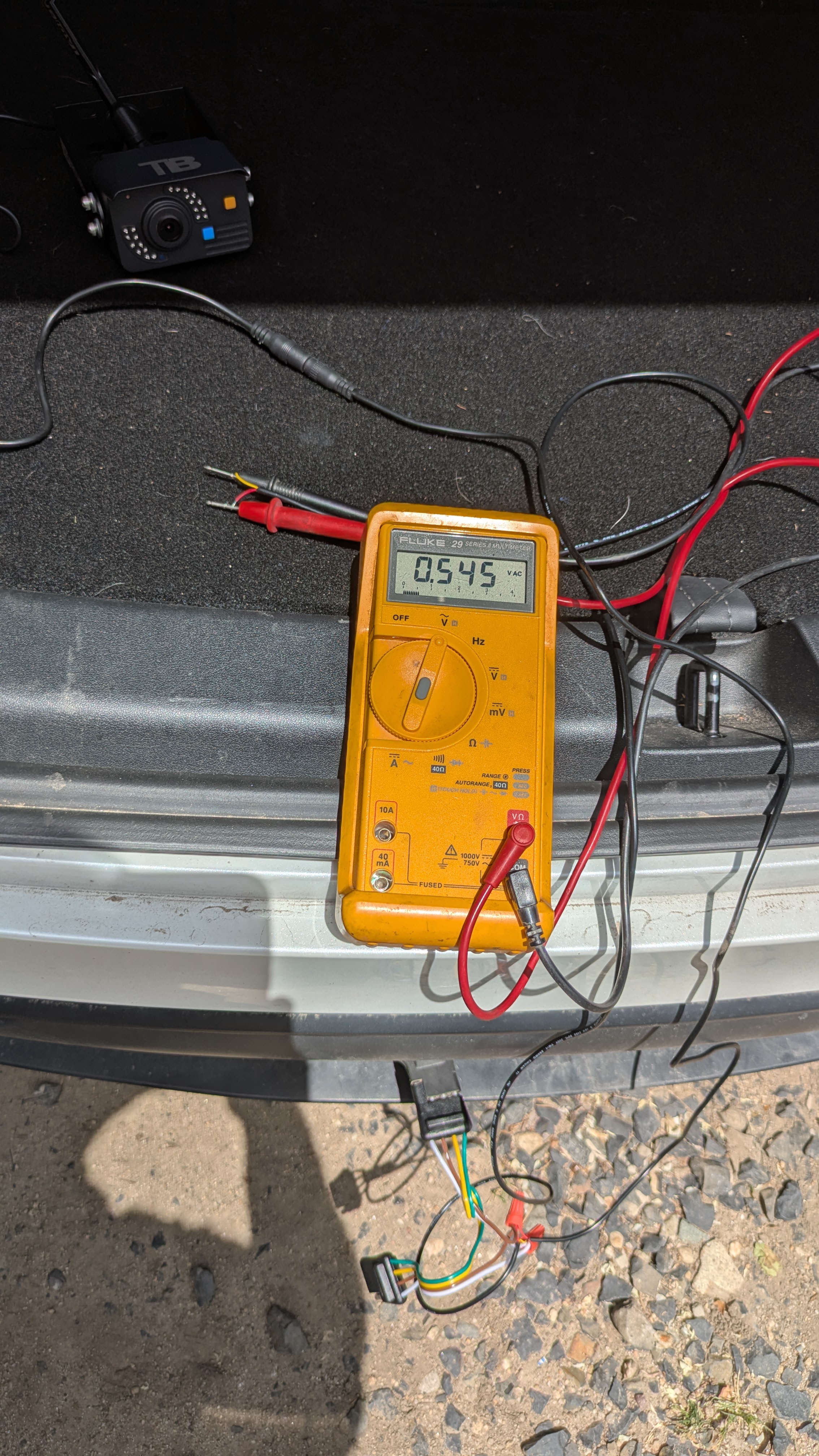
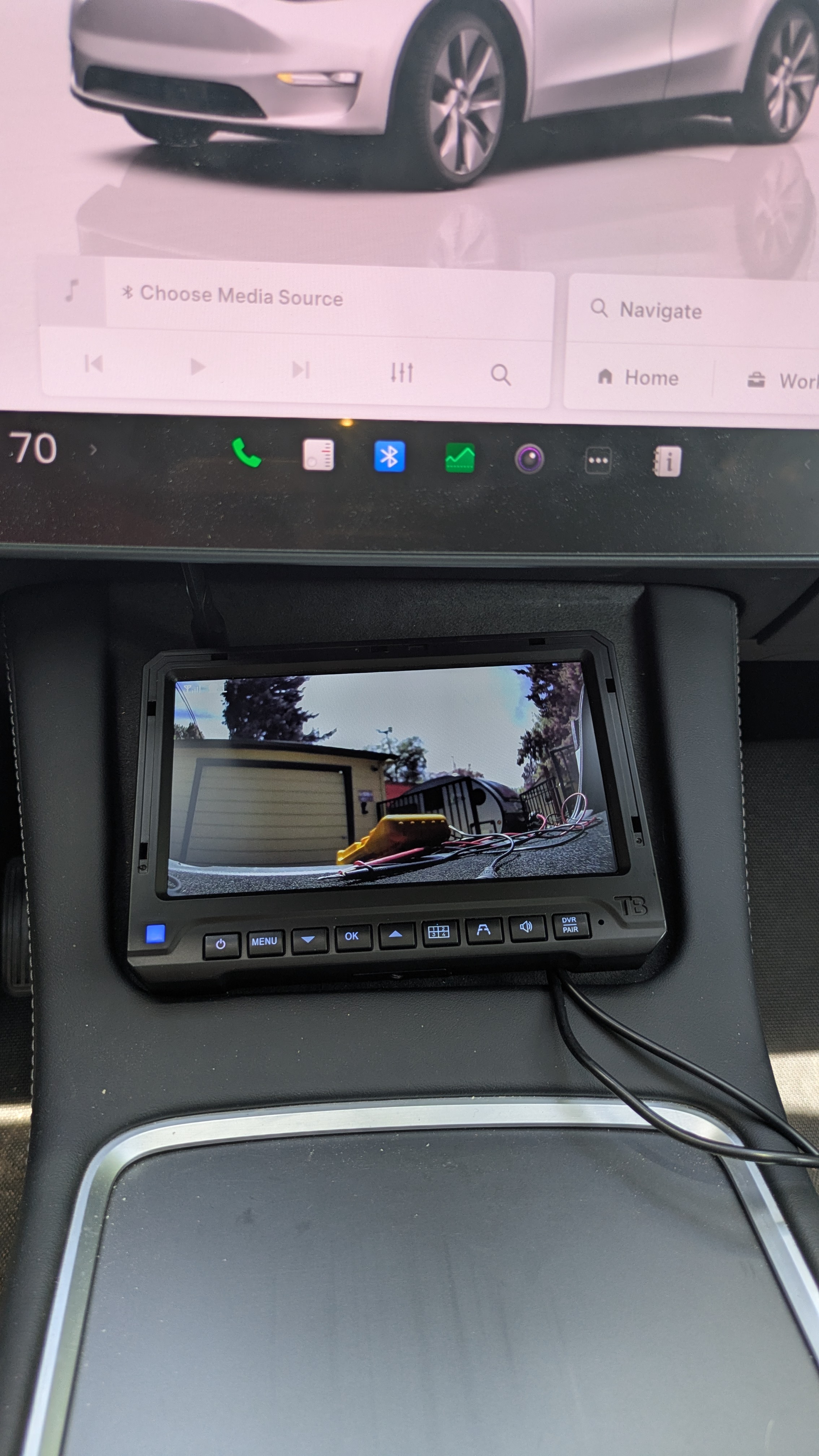
At this point I’m fairly confident that this camera will work with the running lights signal without additional hardware and has the range I need. But this test didn’t power the running lights which may be affected by the camera. I won’t be sure if this really works until I install the camera and monitor and do some traveling with it.
Though my original plan was to pull camera power from the running lights, I’m now leaning toward using a pure DC signal from the trailer battery. Both power sources are available where I’m mounting the camera. I’d rather not pull more power away from the EV (however tiny) and I’d like to avoid any future issues with the PWM signal. I’ll install a SPST switch inside the trailer to turn the camera on and off.
I’ll update this post with details whenever I finish the installation.
 A Seasonal Commute