The stock dining table on my 2023 Safari Condo (SC) Alto F1743 was coming unmoored from the base. I tightened the screws a couple of times but they just loosened back up and a couple were stripped. I also discovered the pedestal flange was cracked at one of the screws.
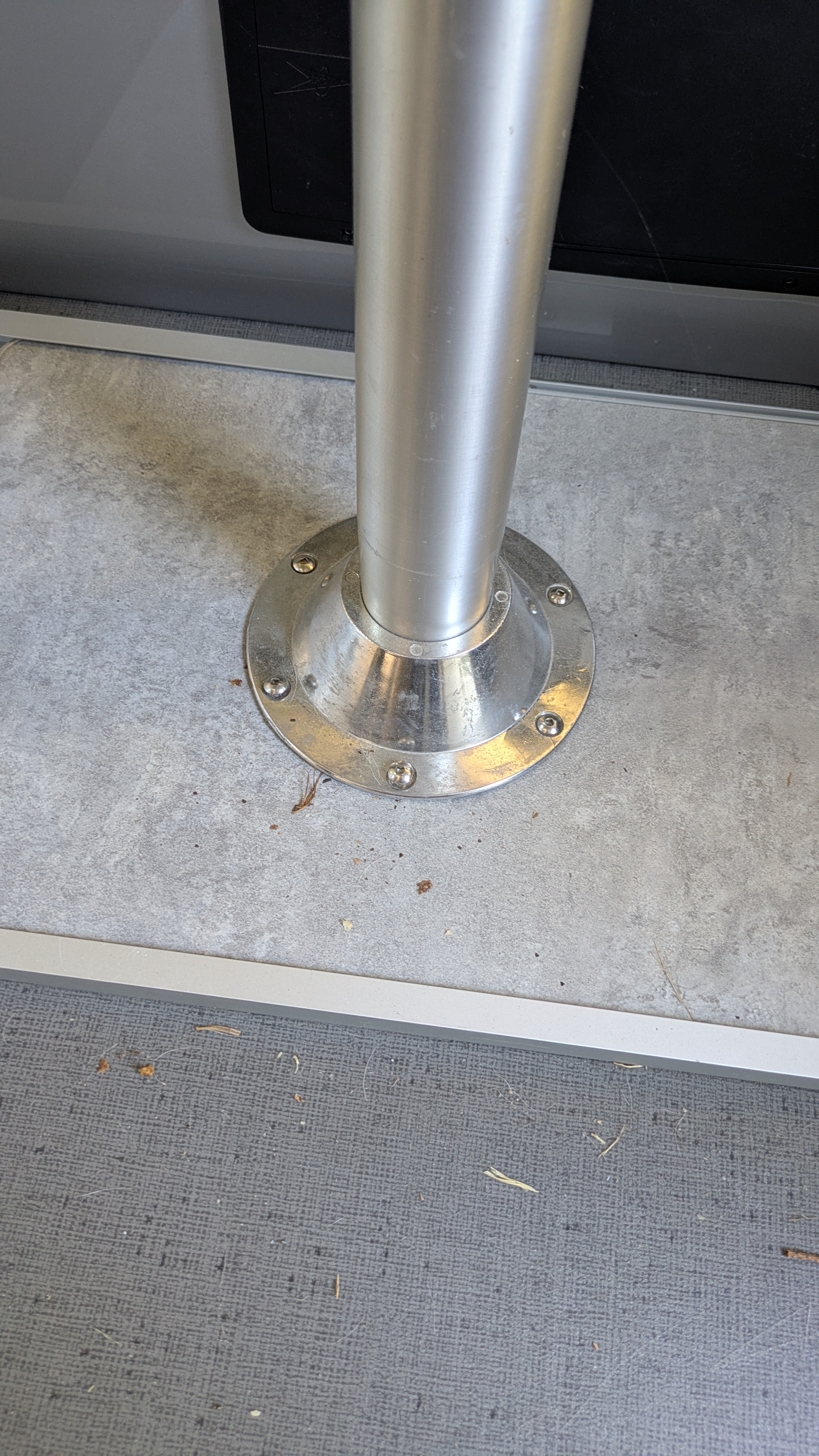
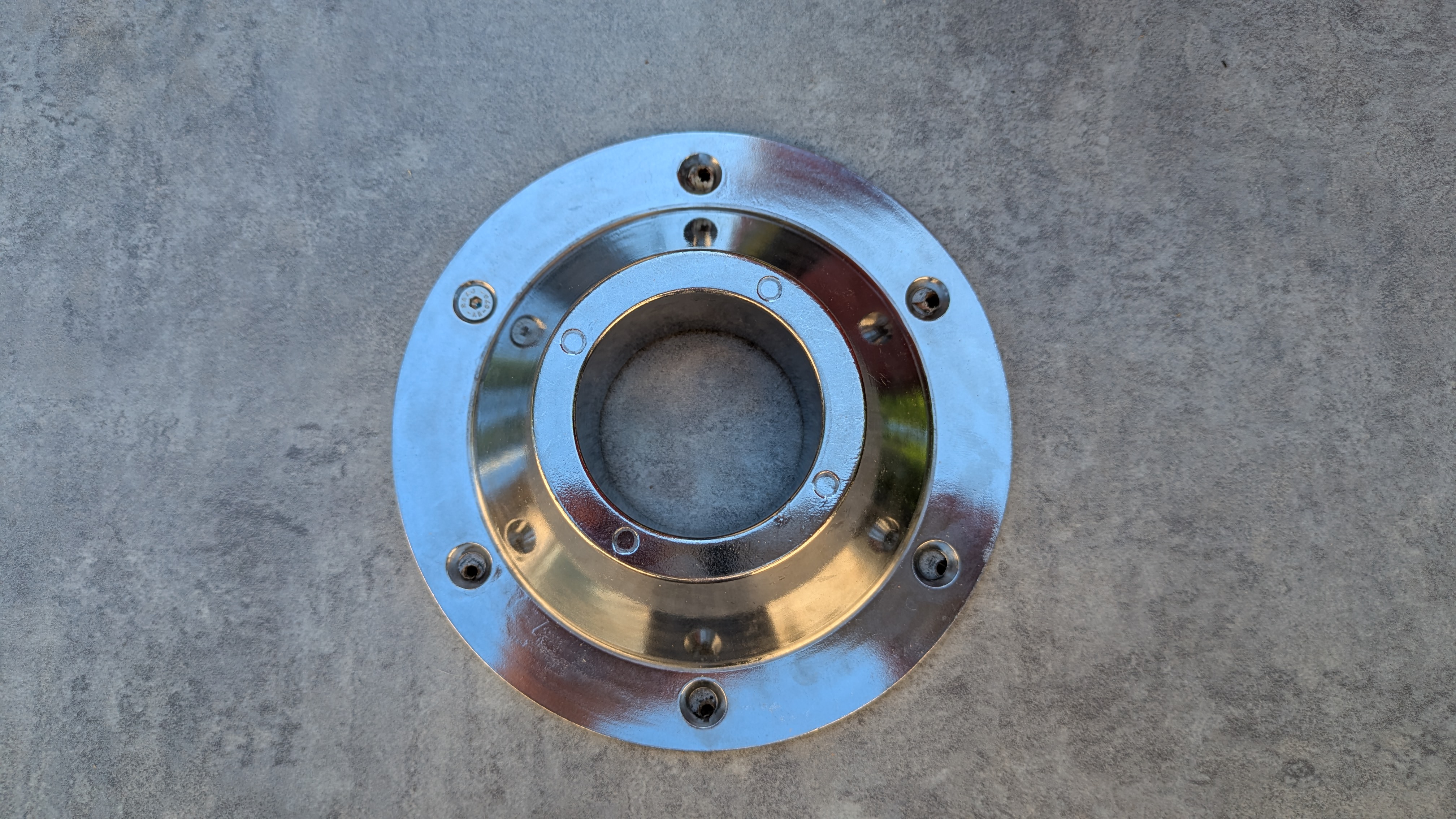
I did a quick search for this pedestal flange at Camping World hoping to find something local but didn’t. There were many possibilities on Amazon and this one seemed like a direct replacement. It does look identical– thin aluminum with chrome plating. And just as likely to crack, so good that it came with two pieces so I have a spare. But the hole pattern is slightly different as shown below. It isn’t that SC just drilled the holes slightly wrong– when the old and new parts are placed back-to-back the difference is obvious.
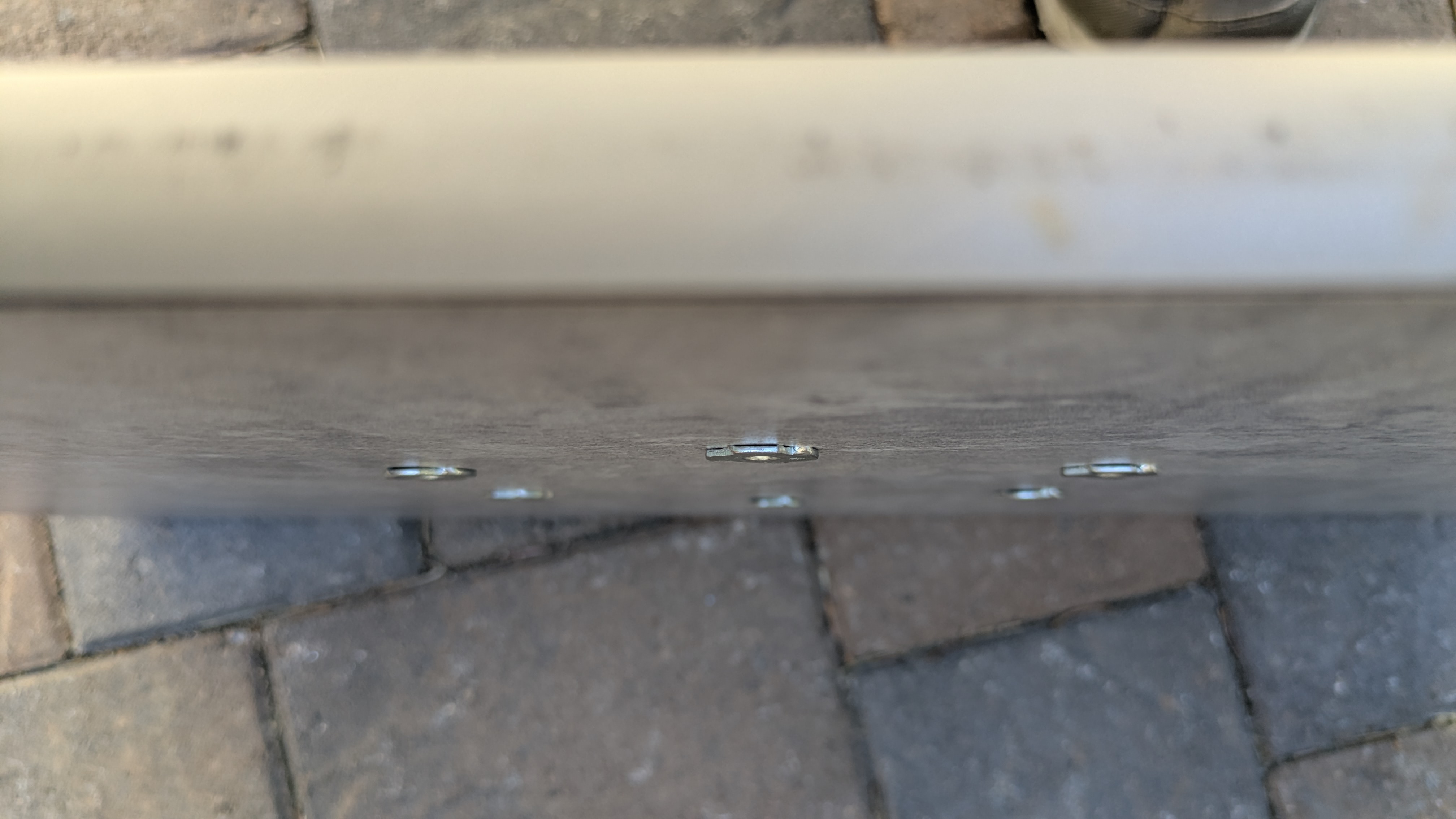
I wasn’t sure what the material of this base board was until I began drilling into it. Some theories were an outer veneer around particle board or high density foam. But I think it’s actually plywood with a veneer. I’m not a fan of using wood screws to fasten the pedestal flange to any of these materials given how much force it sees when sliding that table back and forth or bouncing down the highway. My original thought was to use through-bolts but that would require counter-sinking on the bottom to recess the bolt head so the base board will still slide along the floor.
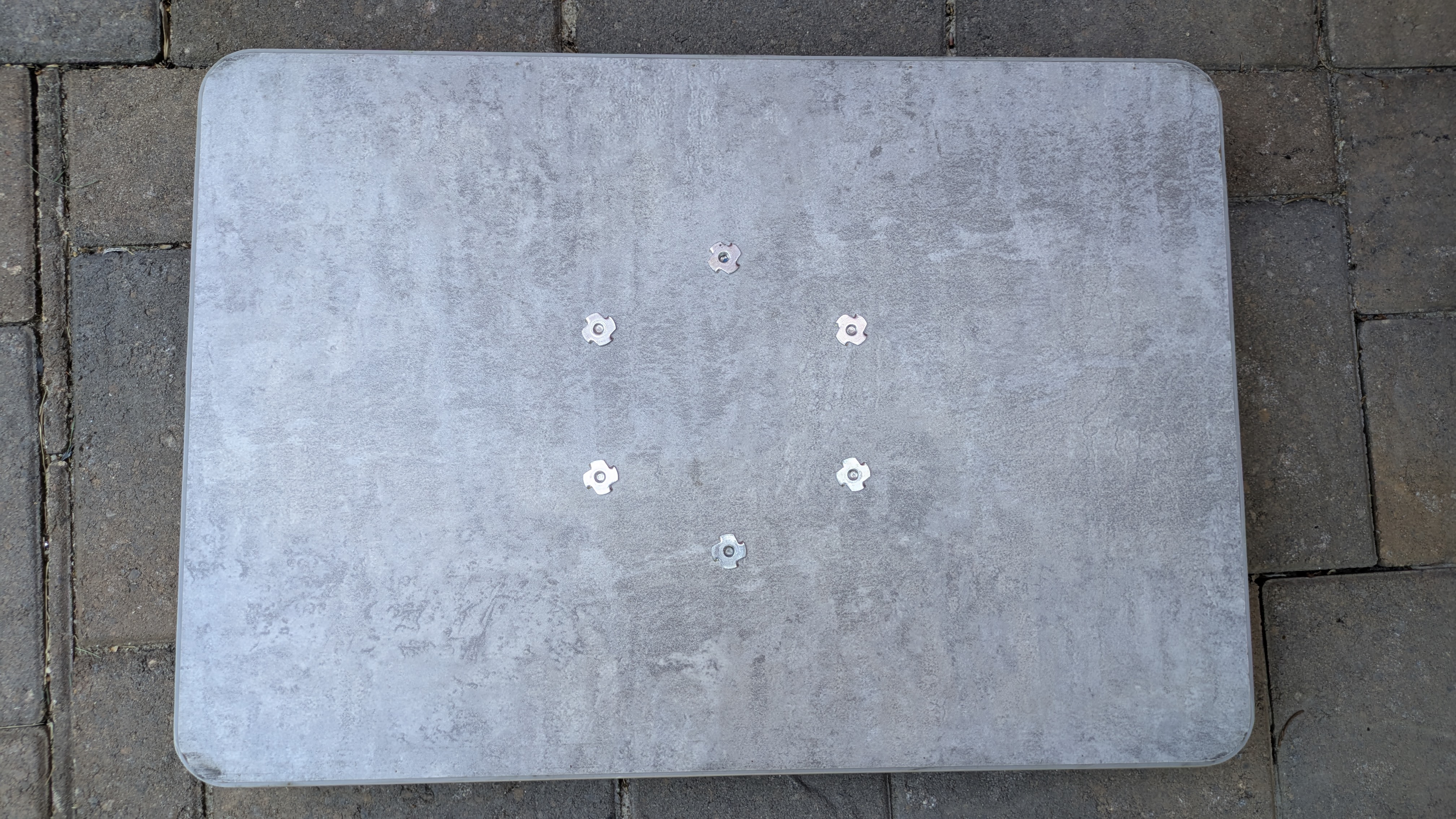
A helpful Altoiste recommended using T nuts. Brilliant. I wasn’t sure if they would recess enough to allow the base board to still slide but gave it a try. They work beautifully. The aluminum bracket on which the base slides is slightly thicker than the exposed edge of the T nut, so it still slides.
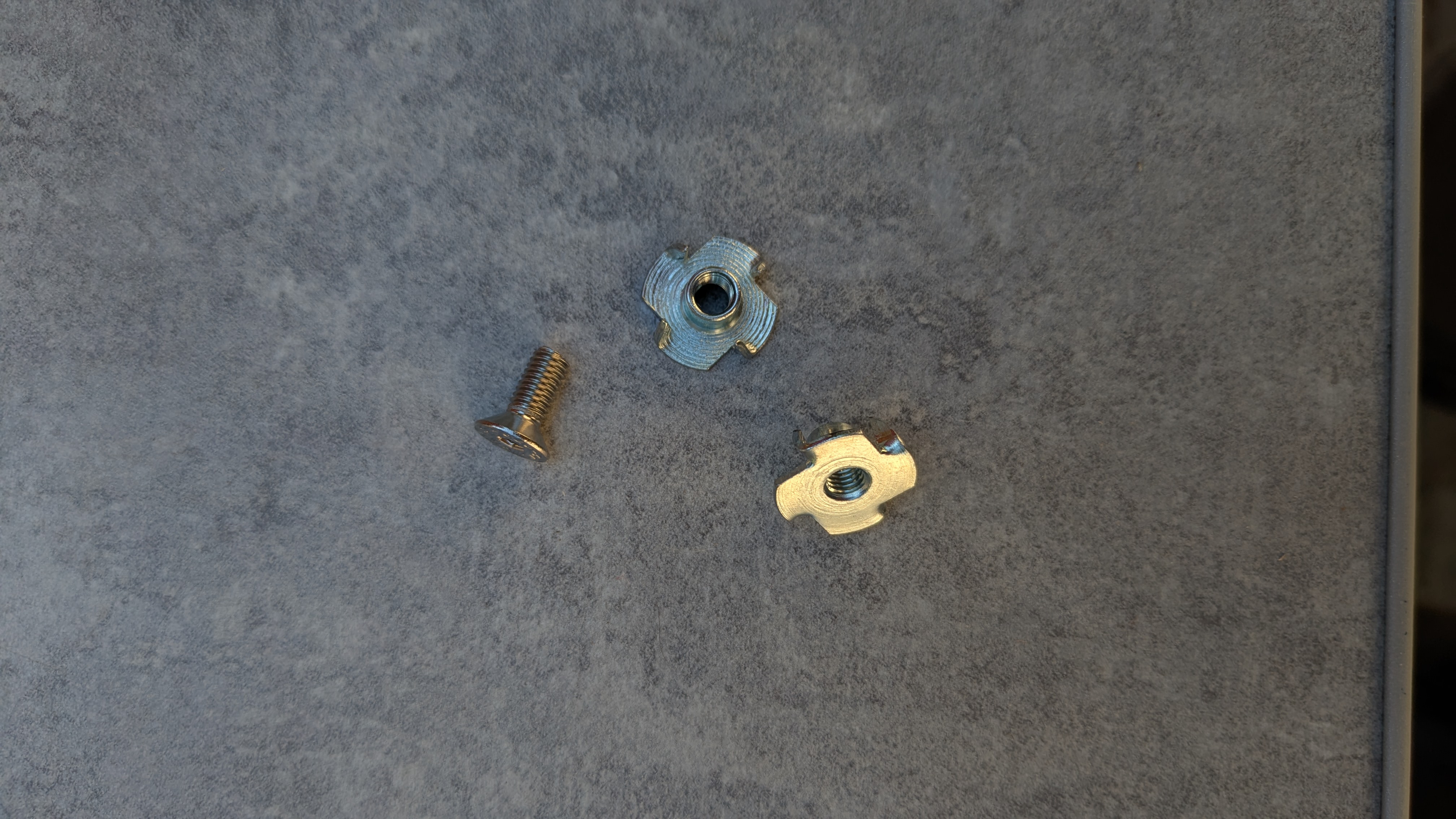
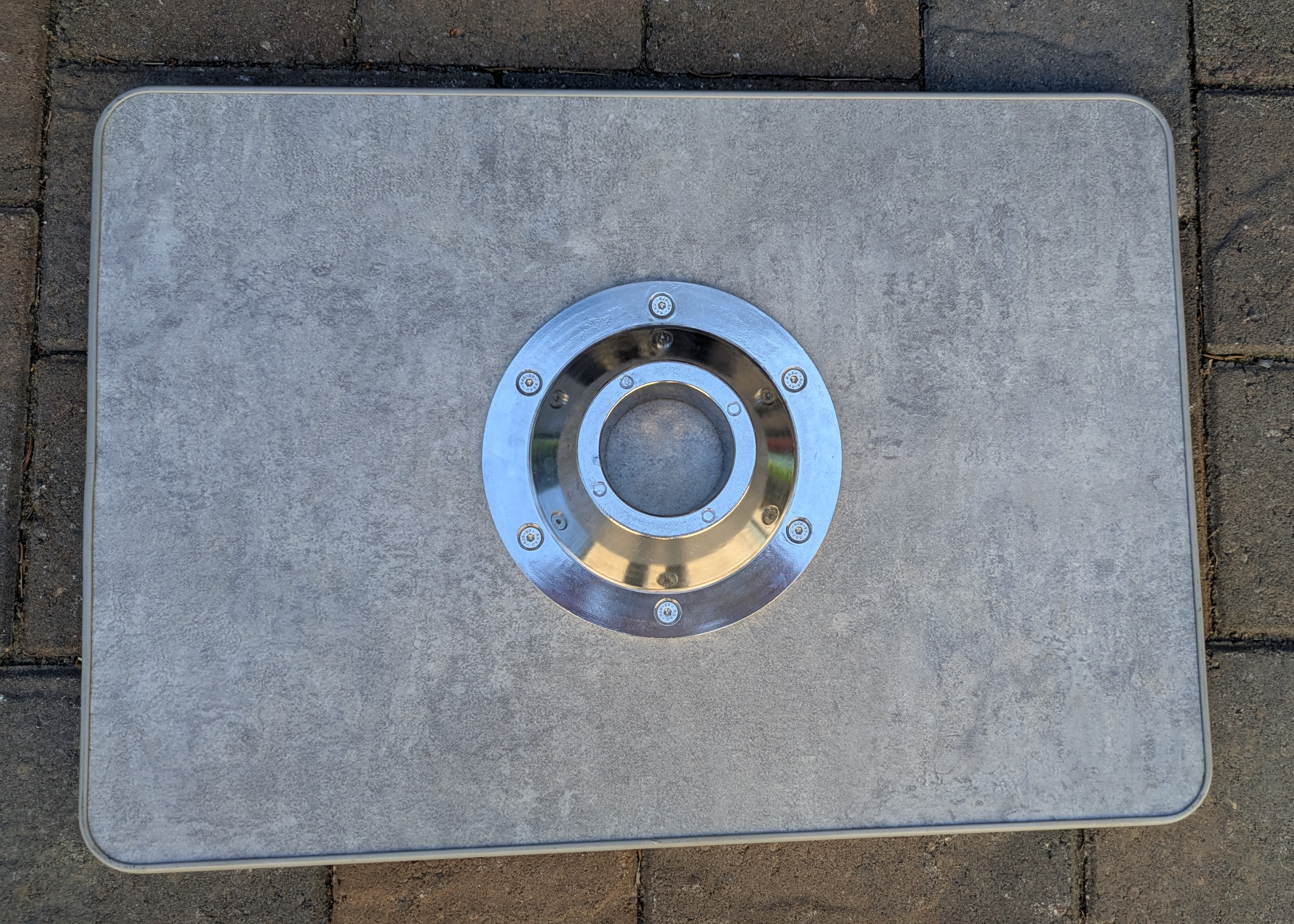
I used M5 T nuts and M5-0.8 16mm stainless steel flat head socket cap machine screws. The holes in the pedestal flange have a counter-sink taper. I think the taper in the screw head better matches the pedestal flange than the round-head screws with no taper that SC used and may be less likely to crack it. A 16mm screw length uses all of the threads of the T nut without protruding past the edge. To install the T nuts I used a long M5 bolt through a piece of scrap aluminum and tightened the nut until it was pulled tight against the base board. Note the picture below shows a 12mm screw length, before I switched to 16mm.
The trim around the edges of the base board is offset so the original bottom was flush with the board and the top had some trim overhang. I figured this must have been intentional so mounted the pedestal flange on the same side. I now think it probably doesn’t matter. Because the hole pattern was slightly off I couldn’t just drill out the the existing holes so I used the new pedestal flange as a template. I drilled out one existing hole and secured the flange with screw and T nut, then drilled the remaining holes through the flange. I thought I might destroy the flange in the process so was happy to have a spare, but it survived. It might have been a better idea to simply rotate the pedestal flange and drill entirely new holes, but this worked.
In the final assembly I added blue thread locker to the machine screws. I also considered adding adhesive between the base board and pedestal flange. SC had used some sort of silicon adhesive but I don’t think it really adhered– I had no trouble separating the two parts. I decided against adhesive. I don’t think the combination of T nuts and machine screws with thread locker will be coming loose any time soon and I don’t want to make things harder if I ever need to revisit this. I think the weak point now is the pedestal flange itself.
When I initially disassembled the table I had a hard time separating the table leg from the bottom pedestal flange. I ended up unscrewing the flange and banging it off with a rubber mallet. I don’t know if it will help but I added a tiny bit of ant-seize compound to both the bottom and top of the table leg. We never convert the table into a bed so not a big deal for us if it seizes again.
For now the table is as solid as ever.
 A Seasonal Commute
This same flange is used twice for the dining table on our Casita. Once for the tube base antta to the floor, and once where the tube attaches to the bottom of the table surface. Our flanges were aluminum and the top one failed completely. Casita sent us a new flange and it was easy to replace. but our table is made of particleboard and the top flange of course can’t be through-bolted because the bolts would stick out on the table surface. So far the screws have held in the particleboard.
LikeLike
Ours is the same setup. For some reason the top flange is intact, it was just the bottom that failed. It seems to me the bottom takes more stress when bouncing down the road and (in our case) sliding the table back and forth, I’m hoping that’s the reason the bottom failed first and that the top doesn’t eventually break. As you say this mod won’t work on the top. And probably not on the bottom either for you since I’m guessing yours is screwed into the floor of the trailer. In the Alto it is screwed into a small base board (same material as the table) that slides back and forth inside an aluminum track.
LikeLike
Is it the aluminum flange that failed for you or the attachment to the table (or both)? I’m pretty unimpressed with this pedestal flange, looked for something stronger but didn’t find anything. Plastic is an option but people really complain about them and consider this one an upgrade.
Oh, you already said the attachment didn’t fail…
LikeLike
Have you considered a Lagun mount to replace the fixed pedestal? This is a common after-sale upgrade in the Alto world. I think we’re OK with the stock table but if it breaks again I’ll probably upgrade.
LikeLike